
Calabasas Estate Litigation Lawyer

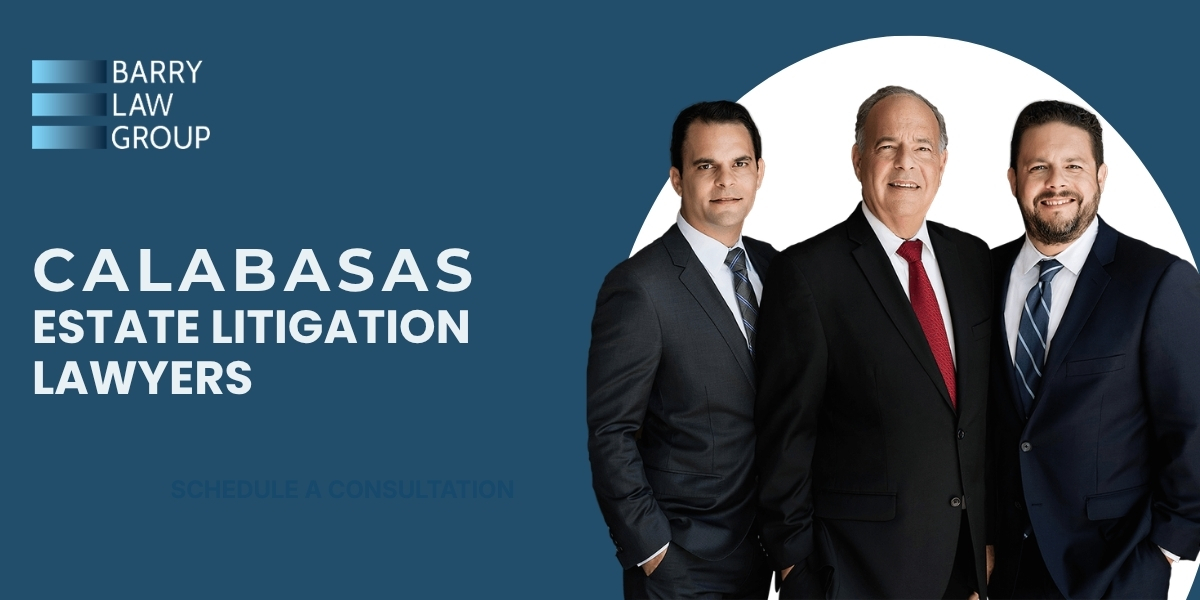
Estate Litigation Attorney in Calabasas, CA
The death of a loved one is incredibly difficult, but all the legal aspects of their passing can make the loss unbearable. One challenging situation that can arise is estate litigation due to a dispute over the decedent’s estate. Fighting to protect your loved one’s wishes is an immense task to take on while also dealing with the grief their loss caused. A Calabasas estate litigation lawyer can step in and make the process easier, allowing you to focus on other aspects of your life.
Experienced Estate Litigation Support in Calabasas
Trusting a legal team to help you through estate litigation is not easy. Barry Law Group understands the challenge you face and has worked diligently to build a team you can trust to help you through this process. With years of experience handling estate disputes in the foothills of the Santa Monica and Santa Susana mountains, we can be a valuable resource as you defend your loved one’s wishes and protect their estate. Whether you need assistance with probate administration or trust litigation, our attorneys provide focused guidance every step of the way.
What Is Estate Litigation?
Estate litigation occurs when a dispute arises over a decedent’s estate. Some potential causes of estate litigation are:
- Beneficiary disputes: Beneficiary disputes or familial disputes arise when beneficiaries or family members believe they are entitled to a greater share of the estate than specified in the will or trust. They may also believe that the terms of the will do not reflect what the deceased intended.
- Multiple wills: It is not uncommon to create several wills during a lifetime. Adding children, divorce, remarriage, and estrangement are all reasons why an estate plan may be updated. If a more recent will surfaces after one has already been presented, litigation may be required.
- Lack of formalities: In California, written wills must be signed by the testator or someone on their behalf, and two witnesses must be present. Failure to meet these requirements can result in an invalid will.
- Lack of capacity: A testator is required to have the capacity to understand their assets and to whom the property is being distributed.
- Undue influence: If a testator is coerced or compelled while planning their estate, the estate plan can be challenged. This is often seen when one descendant attempts to coerce the parent into excluding the other descendants from the will, or when a relative stranger disrupts a long-established plan that would typically pass most of the estate to family.
- Breach of fiduciary duty: Certain fiduciary duties of prudence, honesty, and loyalty are owed to the beneficiaries of the estate by the executor or administrator. Litigation can be initiated if these duties are violated.
Working with a knowledgeable estate planning lawyer can help reduce the chances of these challenges arising. If challenges do arise, it is essential to work with a legal team that has experience specifically in estate litigation, such as Barry Law Group.
Key Participants in Estate Litigation
The number of people who can potentially be involved with estate litigation is one of the reasons why it can be so complex. Potential people or entities that are likely to be involved include:
- Executor/Administrator: In cases where the estate belongs to a decedent, the personal representative will either be an executor if the person died with a will or an administrator if the person died without a will. They are responsible for administering the Estate according to the decedent’s wishes and/or state law. Only 32% of Americans have a will, so administrators are appointed frequently.
- Beneficiaries: The entities or individuals that will inherit assets from the estate through a will, trust, or according to the law.
- Trustees: The individuals or institutions that manage the assets held within a trust.
- Fiduciaries: Individuals or entities that have a legal requirement to act in the interests of the estate’s beneficiaries.
- Family members: Children, a spouse, or other relatives who may have a financial or legal interest in the estate, even if they are not named.
- Creditors: Individuals or entities that are owed money from the decedent or the estate.
Understanding the Difference Between Will and Trust Contests
Although trusts and wills are both common estate planning tools, disputes involving each follow different legal procedures in California. Understanding those differences can help you avoid costly missteps. A trust could be contested if someone alleges that the financial planning tool is invalid due to undue influence, lack of mental capacity, fraud, duress, or improper execution.
While revocable living trusts are designed to allow assets to avoid probate, they do not prevent litigation. Trust disputes are not uncommon in California. A critical deadline applies when a trustee serves beneficiaries with the statutory notification required under California Probate Code section 16061.7 following the trust maker’s death.
Under Probate Code section 16061.8, an interested party generally has 120 days after service of that notification, or 60 days after receiving a copy of the trust if requested during that period, to file a legal challenge. Missing this deadline may permanently bar a beneficiary or heir from contesting the trust’s validity.
A contest will follow a different dispute process because wills are administered through the probate court. Rather than filing a separate dispute in court, an interested party works within the probate process and files objections contesting the will as the case moves forward through the Los Angeles County Superior Court’s Probate Division.
The court then considers evidence regarding issues such as testamentary capacity, undue influence, duress, forgery, or other grounds for complaints. A will must be executed in compliance with the state’s execution requirements. If there are valid grounds for a dispute, the probate court may conduct discovery, hear witness testimony, and resolve the contested issues before determining whether the will should be admitted to probate.
Alternatives to Trial: Mediation and Settlements
Not every dispute ends with a courtroom trial. In fact, the probate courts encourage parties to resolve differences without resorting to litigation whenever possible. Settlements and mediation are two ways that a probate case can end without going to trial. Mediation allows a neutral third party to work with beneficiaries, trustees, executors, and other interested individuals to work toward a mutually acceptable resolution.
This approach can greatly reduce the cost of litigation and shorten the overall timeline for a case. Mediation is also confidential, which can help families with large estates keep their private information from becoming public record. Since mediation is collaborative, all parties are more likely to leave the session feeling like their interests were respected.
Direct talks can also lead to a settlement. When both sides are willing to make concessions in the interest of resolving the probate case, that can lead to favorable outcomes that avoid the need for litigation.
How Long Does Estate Litigation Take in Los Angeles County
Whether a probate case is dealing with property in Hidden Hills, Calabasas Park, Vista Point, or elsewhere in Calabasas, the timeline largely depends on several main factors. Relatively straightforward cases that are not disputed could be resolved in several months, while complex cases involving multiple beneficiaries, accusations of undue influence, and large estates could take a year or longer to resolve.
The specific timeline often depends on the amount of discovery required and the size of the estate. The schedule of the court is another consideration, along with the willingness of the parties to cooperate and work toward compromise. When there are disputes over the value of assets and properties and outside consultants are brought in to clarify those concerns, cases can require multiple hearings and greater involvement by the court and attorneys.
Financial Elder Abuse and Estate Litigation in California
Accusations of financial elder abuse are among the most common reasons that estate litigation arises in California, particularly after the death of a loved one. Under the California Elder Abuse and Dependent Adult Civil Protection Act, and related provisions of the Welfare and Institutions Code, family members and other interested parties may pursue legal remedies when an elderly person’s assets were wrongfully taken.
Accusations can also arise that the representative of the estate is taking advantage of the probate process for self-profit. An estate plan that was manipulated through fraud or undue influence could be questioned by the courts when there is sufficient evidence to back those accusations.
In many cases, the alleged misconduct is not discovered until after the individual has passed away. At that time, beneficiaries may notice unexpected changes to a trust, will, or beneficiary designation. Over seven million people are living with Alzheimer’s, and dementia can leave seniors more vulnerable to manipulation by caregivers or even relatives.
When an individual who maintained the same estate plan for many years suddenly executes a new trust amendment, adds someone to financial accounts, or adds a new power of attorney under suspicious circumstances, those situations can become the subject of probate and trust litigation after the decedent’s death.
Other warning signs of financial elder abuse include:
- Unexplained changes to estate planning tools
- Sudden bank withdrawals or wire transfers
- Gifts that are not consistent with the estate owner’s longstanding wishes
- Isolation from trusted family members
- Missing financial records
- Forged signatures
These matters are taken seriously by the courts, and credible accusations can lead to a close examination of medical records, witness testimony, financial statements, emails, and communications with caregivers to determine whether financial elder abuse occurred and what remedies are needed.
Hire an Estate Litigation Lawyer
For over 38 years, Barry Law Group has dedicated its time to serving the community through various types of litigation, including estate litigation. Our core values are:
- Top legal strategies,
- Unmatched dedication,
- Transparency, and
- Impeccable performance.
We are selective about the cases we choose to take on to provide each client with the personalized attention they deserve. In a city with an average home value of $1,727,018, the outcome of probate cases can have significant financial consequences for all the parties involved.
When you hire an estate litigation lawyer from Barry Law Group, you gain support from a Calabasas estate litigation attorney who understands the state’s estate litigation laws and how to manage a complex estate litigation case with a focus on protecting your interests. Probate lawyers bring decades of experience navigating the probate court system. They can protect you from false accusations and pursue outcomes that align with your interests.
FAQs
How Do I Challenge an Estate in Calabasas, CA?
Challenging an estate in Calabasas, CA, can be a complicated process that requires specific conditions to be met. You must establish standing and grounds, which means demonstrating that you are an interested party with a direct stake in the outcome and that you have a legal reason for the challenge. It is recommended that you speak with an estate litigation attorney, as they can provide valuable insight into your situation.
How Easy Is It to Challenge a Will or Trust?
It is not easy to successfully challenge a will or trust. In addition to being legally complex, estate challenges are often financially costly. Roughly three percent of wills are challenged, and not all challenges are successful. Before undertaking this process, it is important to speak with an estate litigation attorney to determine if you have grounds and standing.
What Can Cause Estate Litigation?
There are several potential causes for estate litigation. Lack of capacity, undue influence, and lack of formalities are all potential challenges to the decedent’s wishes and the validity of the documents. If the administrator or executor is not acting within their fiduciary duties, litigation may be an option. If you believe estate litigation is the appropriate choice for your loved one’s estate, Barry Law Group can help.
Do I Need an Attorney for Estate Litigation in California?
You are not legally mandated to retain an attorney for estate litigation in California. It is, however, recommended that you speak with an attorney before initiating the process. They can help you determine if you have grounds and standing before you commit financial and time resources to the endeavor. If you choose to progress with litigation, an estate litigation attorney can help you through the complicated legal process.
Calabasas Estate Litigation Lawyer
Going through estate litigation without strong legal representation could be a regrettable mistake. The probate courts run on strict deadlines, and failures to follow court rules could lead to liabilities. When you work with Barry Law Group, you gain steady support from a family-owned boutique law firm that believes in educating clients about the process and prioritizing the interests of those we serve.
Our goal is to protect your rights and interests at every step of the probate process. Litigation requires a focused, results-driven approach. Barry Law Group understands the legal and emotional complexities of challenging an estate or defending an estate against a challenge. If you are in either of these positions, please reach out to our team to see how we can assist you.
Success of Your
Legal Matter.
Barry Law Group is comprised of attorneys and longtime staff members who are committed to the success of your legal matter. The firm understands that for most litigation is uncharted worrisome and often terrifying.

Business Address
16633 Ventura Blvd. Suite 1000
Encino, California 91436
9:00am – 5:00pm
Monday through Friday
Contact Us
-
Call
(818) 789-9444(818) 789-3233 -
Mail
[email protected]
© Copyright Barry Law Group 2026. All rights reserved.
Disclaimer | Site Map | Privacy Policy
Digital Marketing By 
*Images are obtained under license from Canva and other third-party stock image providers, with attribution included where required.